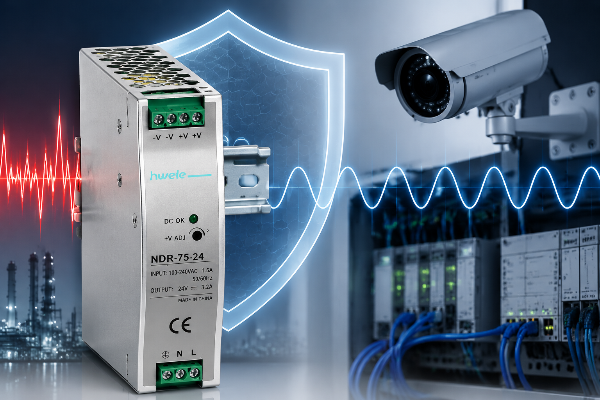


A power supply that only delivers volts is blind. A supply with a DC-OK relay contact tells your cabinet exactly when output is healthy, when it has dropped out, and when it is about to fail. By wiring that dry contact to a PLC, BMS, or IoT gateway, you turn a rack of DIN-rail units into an observable, remotely diagnosable system—cutting truck rolls and catching faults before they cascade. HENGWEI DIN-rail families (HDR, MDR, NDR) carry DC-OK and alarm contacts ready for this integration.
A DC-OK (sometimes labeled “DC OK” or “Power Good”) contact is a galvanically isolated relay inside the supply. It energizes when the DC output is present and within tolerance, and de-energizes the moment the output falls out of range—overload, input loss, or overtemperature. To the rest of your system it is a simple binary: healthy or not. That one bit removes the guesswork from remote sites.
Without DC-OK, a field technician finds out a supply died only when the load stops working. With DC-OK polled by the cabinet controller, the SCADA screen shows a red flag the instant a unit drops, and you dispatch to a known fault instead of a symptom. At scale—hundreds of cabinets—this is the difference between reactive firefighting and scheduled maintenance.

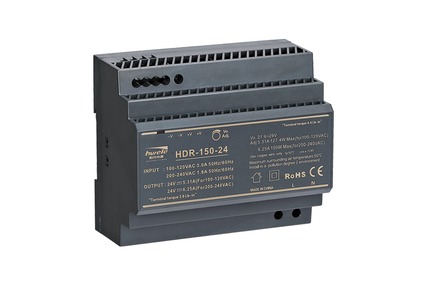
HDR AC/DC High Power Plastic DIN Rail Power Supply 150W ›

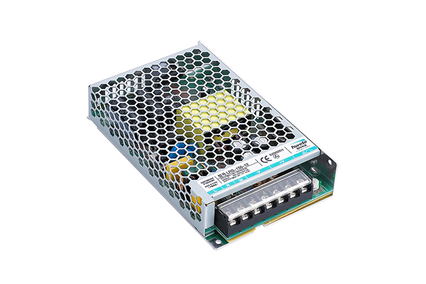
MDR 100W AC/DC High Power Industrial DIN Rail Power Supply ›
The contact is normally a dry (voltage-free) pair: common (C), normally-open (NO), normally-closed (NC). Connect C and NO to a PLC digital input with the PLC’s own 24 V sense. When the supply is good, the contact closes and the input reads high; on fault it opens and the input drops—your logic fires an alarm. Because the contact is isolated, it never exposes your 24 V bus to the AC side.
Both the HDR 150 W and MDR 100 W DIN-rail supplies are built for rail mounting in control panels and expose the DC-OK / alarm contact. Mount them on a standard 35 mm DIN rail, land the contact on your controller, and the cabinet becomes self-reporting.
| Signal | Use | Recommended action |
|---|---|---|
| DC-OK | Output healthy | Heartbeat / status LED |
| Alarm | Pre-fault warning | Email / ticket, schedule swap |
| DC-OK + Alarm | Full diagnostics | Auto-switch redundant unit |
Picture 50 roadside cabinets, each with two DIN-rail supplies feeding a controller and radios. Wire each DC-OK to the cabinet PLC; the PLC reports status over the existing cellular link. A single dashboard now shows every supply’s health. When one DC-OK opens, you get a ticket with the cabinet ID—no truck roll to “figure out what died.” Add the alarm contact and you often catch the degradation a week early.
Q: Is the DC-OK contact powered or dry?
A: It is a dry (voltage-free) relay contact, isolated from both the AC input and the DC output. You supply the sense voltage from your PLC.
Q: Can I run DC-OK and an alarm together?
A: Yes. Use DC-OK for healthy/fault and the alarm contact for early warning, then act on either in your controller logic.
Q: Do HENGWEI DIN-rail supplies support this?
A: The HDR, MDR, and NDR rail families expose DC-OK / alarm contacts for cabinet diagnostics—check the specific model sheet for contact ratings.


 Optimized by Seraphinite Accelerator