

The two labels look interchangeable and are routinely confused on purchase orders, but they come from different rulebooks and protect against different hazards. Class 2 is a North American energy-limitation concept: the source cannot deliver enough energy to start a fire, so the wiring downstream is treated as low risk. Class II is an IEC insulation concept: the product relies on double or reinforced insulation instead of a protective earth, so no single fault can expose a live part. One limits energy, the other limits shock. Knowing which one your market and your inspector actually require is the difference between a smooth sign-off and a container sitting at the port.
The confusion starts because both labels contain the word class, and both get printed on the same nameplate. They were written by different committees to control different hazards.
Class 2 is a North American installation and product concept. Article 725 of the NEC defines Class 2 circuits, and UL 1310 covers the Class 2 power units that feed them. The whole idea is energy limitation: if the source cannot deliver enough voltage, current or volt-amperes to ignite anything even under fault, the downstream wiring is treated as low risk and the installation rules relax accordingly.
Class II comes from the IEC world — IEC 61140 sets out the general shock-protection principles, applied through product standards such as EN/IEC 62368-1 for IT and audio/video equipment and EN 60598-1 for luminaires. Here the concern is electric shock. Class II equipment protects the user with two independent layers of insulation (double insulation) or one layer of reinforced insulation, so a single fault cannot make a touchable part live. Because the protection does not depend on earthing, a Class II product has no functional protective-earth conductor.
So the first question on any project is not which class is better but which hazard is the local code trying to control.
A Class 2 power unit is defined by what it can not deliver. Under dry conditions the output is limited to 30 V RMS (42.4 V peak) or 60 V DC, and the available power is limited — commonly capped around 100 VA for an inherently limited source, with additional current limits that depend on whether the source is inherently limited or limited by an overcurrent device. That is precisely why Class 2 dominates 12 V and 24 V LED signage, controls, access systems and low-voltage architectural lighting.
The real benefit shows up on the installation side. Because the circuit cannot deliver enough energy to start a fire, the NEC permits Class 2 wiring methods that are considerably simpler than those for Class 1 or mains circuits — in many cases no conduit, simpler overcurrent protection, and a far easier conversation with the inspector.
The ceiling matters, though. Once you pass roughly 100 VA, Class 2 is no longer available. A 150 W or 240 W LED driver cannot be a Class 2 unit: that is a code and physics limit, not a supplier preference. Projects that need more power move to a Class 1 or Class II wiring approach with proper branch protection.
Class II is about the insulation system between the mains input and anything a person can touch. Rather than relying on a protective-earth conductor to carry fault current and trip a breaker, Class II construction uses double insulation — a basic layer plus a supplementary layer — or a single layer of reinforced insulation. Either way, two independent failures would be required before a live part becomes accessible.
You can usually recognise it without opening the case. Class II products carry the concentric-square symbol (a small square inside a larger one) and typically have a two-pin mains inlet with no earth pin, or a three-pin inlet whose earth contact is plastic. Internal creepage and clearance distances are larger, and the enclosure is designed so that no single screw, seam or cable entry can bridge the insulation barrier.
In the IEC world Class II is the default expectation for a great many luminaires and consumer-facing adapters, which is exactly why European buyers ask for it by name.
| Aspect | Class 2 | Class II |
|---|---|---|
| Origin | NEC Article 725 + UL 1310 | IEC 61140; EN/IEC 62368-1, EN 60598-1 |
| Hazard addressed | Fire / energy delivered by the output | Electric shock from the mains |
| Mechanism | Limits output voltage, current and VA | Double or reinforced insulation |
| Typical limits | 30 V RMS / 60 V DC, about 100 VA | No numeric output limit |
| Earthing | Earth may still be present | No protective earth required |
| Marking | “Class 2” or “Class 2 Power Unit” | Concentric-square symbol, “Class II” |
| Installation effect | Simplified NEC wiring methods | Two-pin supply, no earth conductor |
| Typical application | US low-voltage lighting, signage, controls | EU luminaires, IT/AV gear, chargers |
Notice that nothing in the Class 2 column mentions insulation, and nothing in the Class II column mentions watts. The two are orthogonal, and a well-designed product often carries both marks.
Take the same 24 V LED sign and ship it to two places. In Chicago the inspector wants to see a Class 2 listing on the driver feeding the sign, because the circuit is installed under NEC Article 725. In Munich the identical sign is a luminaire placed on the EU market, and the buyer asks for Class II construction plus a Declaration of Conformity under the applicable directives.
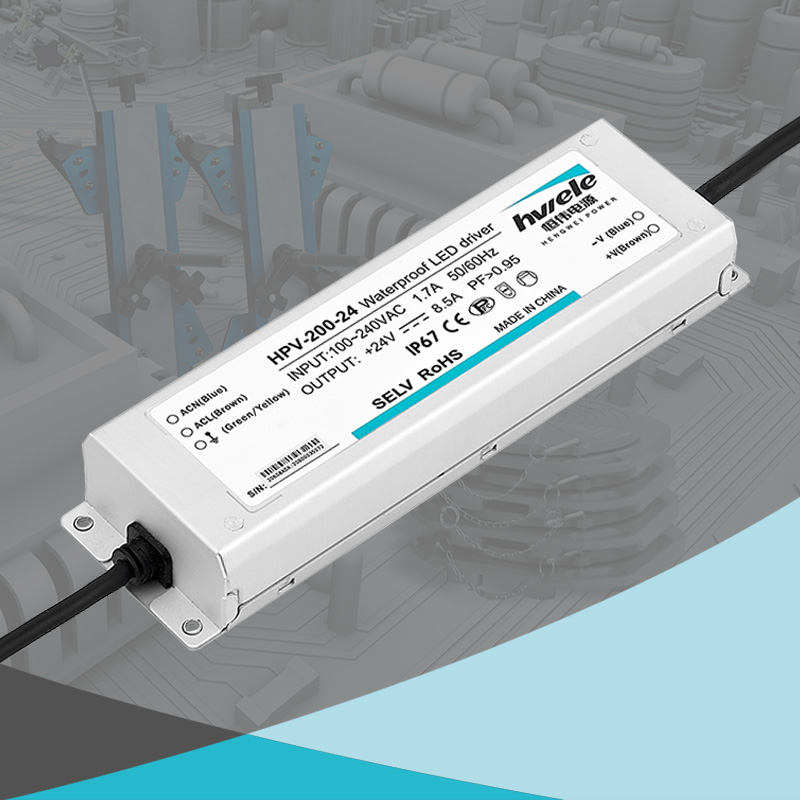
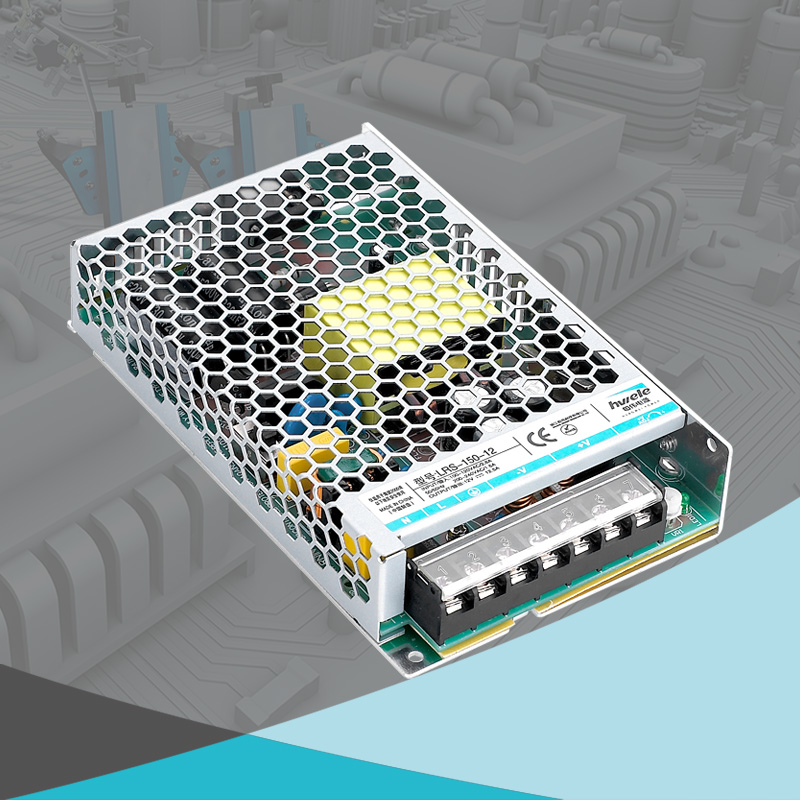
Neither requirement is wrong — they answer different questions. The practical trap is that a large driver cannot satisfy the first one. A 150 W waterproof unit such as HENGWEI’s 150 W High-PFC waterproof aluminium LED driver is a Class II, IP67 product by design; at that power level Class 2 is off the table, and the project should be engineered as a Class 1 or Class II installation with proper branch protection instead.
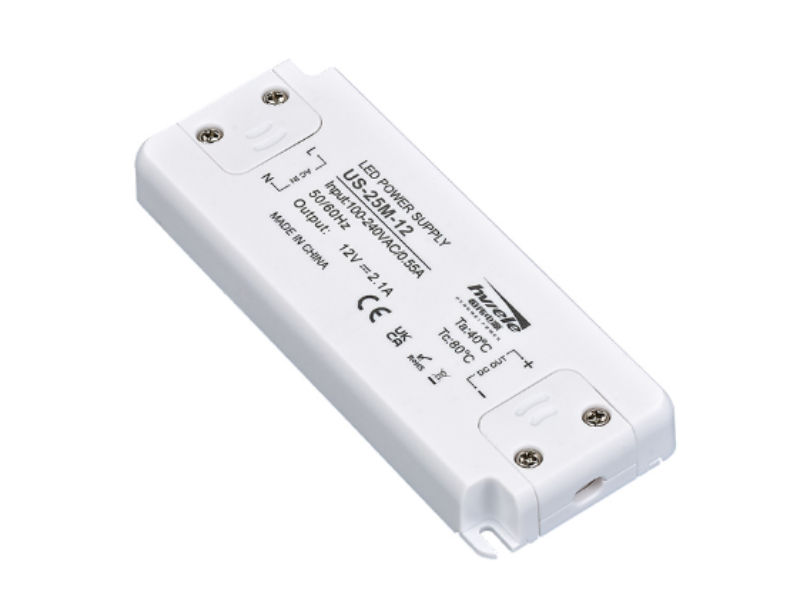
For genuinely small loads the conversation changes. A 6 W marker light or a 20 W controller rail sits well inside the Class 2 ceiling, and HENGWEI’s sealed constant-voltage drivers — the LPV-E 6 W and the LPV-E 100 W IP67 — operate in the output range where a Class 2 listing is physically possible. Confirm the mark on the exact model you are buying, because certification is granted per model, not per family name.
Write the requirement as three separate lines on the purchase order: the output class you need (Class 2, with the VA ceiling in mind), the insulation class you need (Class II where the market expects it), and the agency mark you will accept. Then size the driver for the load plus 20% headroom and confirm the IP rating for the installation environment.
A short worked example makes the trade-off clear. A 24 V LED sign drawing 72 W continuous: a 100 W Class 2-capable driver leaves roughly 28% headroom and keeps the project inside the Class 2 ceiling. A 150 W driver gives more thermal margin but moves the job out of Class 2 and into a Class 1 / Class II wiring discussion with branch protection. Choose deliberately — that single decision changes the wiring method, the inspection and the paperwork.
Q: Is Class 2 the same as Class II?
A: No. Class 2 (NEC Article 725 / UL 1310) limits how much energy the output can deliver, mainly to prevent fire. Class II (IEC 61140) is an insulation construction that removes the need for a protective earth, mainly to prevent electric shock. A product can carry one mark, both, or neither.
Q: Can a 150 W LED driver be Class 2?
A: Generally no. Class 2 power units are limited to roughly 100 VA, so larger drivers are specified as Class II or Class 1 instead. If a project demands Class 2, the usual answer is to split the load across several smaller supplies.
Q: What should I check on the datasheet?
A: The marking itself — the words “Class 2” or the concentric-square Class II symbol — plus the agency file number and the stated output voltage, current and VA limits. A product family name is not a certification.
Q: Does HENGWEI build both types?
A: HENGWEI builds sealed constant-voltage LED drivers in the low-power ranges where Class 2 listings are realistic, plus Class II insulated aluminium and plastic-shell drivers above 100 W. Confirm the exact mark for the model you are ordering.


 Optimized by Seraphinite Accelerator