

European buyers increasingly treat “ErP compliant, no-load under 0.5 W” as a line item in the tender rather than a marketing bullet, and with good reason: it is a legal gate, not an aspiration. Under the Ecodesign framework, separate LED control gear must draw no more than 0.5 W with nothing connected to its output, external power supplies are held to staged no-load and average-efficiency limits, and the paperwork has to exist before goods clear customs. This article sets out which regulation applies to which product, what the 0.5 W figure actually covers, how a switching supply physically gets there, and what to demand from a datasheet and a Declaration of Conformity.
“ErP” is shorthand for the Energy-related Products framework, Directive 2009/125/EC. The directive itself sets no numbers; it authorises the Commission to publish product-specific implementing regulations that do. Buyers often use “ErP 2026” as shorthand for the current expectation, but the obligation always traces back to a specific regulation, so it is worth naming them.
Commission Regulation (EU) 2019/1782 lays down ecodesign requirements for external power supplies. It took effect from April 2020 and repealed the earlier Regulation (EC) No 278/2009. It sets no-load power limits and minimum average active efficiency, and it added labelling and documentation duties. The earlier regime had already established the well-known 0.5 W no-load ceiling, with tighter 0.3 W values appearing for certain low-power AC-DC and low-voltage categories.
Commission Regulation (EU) 2019/2020 covers light sources and separate control gear — the legal term for external LED drivers. It applies from 1 September 2021 and caps the no-load power of separate control gear at 0.5 W, with off-mode held to the same value. For an LED driver manufacturer and for anyone importing drivers, this is usually the regulation that matters.
Regulation (EU) 2023/826 is the horizontal standby regulation covering off mode, standby and networked standby for household and office equipment; it replaced Regulation 1275/2008. The policy direction is away from horizontal rules and towards product-specific ones, so standby limits increasingly appear inside each product regulation instead. Because limits are revised over time, always check the current consolidated text and any newer product-specific regulation before signing a tender.
| Parameter | What it means | Typical limit / expectation |
|---|---|---|
| No-load power | Mains connected, no load on the output | ≤ 0.5 W |
| Off-mode power | Switched off but still connected to mains | ≤ 0.5 W |
| Standby power | Idle, waiting for a control signal | Regulated; state the condition |
| Average active efficiency | Mean of efficiency at 25 / 50 / 75 / 100 % load | Per the applicable regulation table |
| Light-load efficiency | Efficiency at 10 % load | Often specified; efficiency falls sharply here |
| Power factor | At rated load | ≥ 0.9 typical for PFC stages above ~75 W |
The pattern to notice is that the modern regulations care about the bottom of the load range as much as the top. A supply can look excellent at full load and still fail on no-load, which is exactly the gap the rules were written to close.
One driver idling at half a watt sounds trivial. A building is not one driver. Consider a mid-size office with 400 dimming drivers: at a non-compliant 1 W each, the lighting system idles at 400 W overnight, every night. At the compliant 0.5 W cap that halves to 200 W. Over a year the difference is roughly 1,750 kWh — before counting the cooling load that the wasted heat adds to the building.
Multiply that across a retail portfolio or a campus and standby stops being trivia. It shows up in energy audits, in building energy assessments, and increasingly as a required line in tender documents. A driver that cannot evidence 0.5 W is a driver you will have to defend on every project.
With no load on the output, almost everything a supply consumes is standing loss. The main contributors are the controller’s own quiescent current, the start-up resistor that keeps the control IC alive before the auxiliary winding takes over, snubber and clamp networks across the switching devices, the EMI filter and Y-capacitors, the feedback network including the optocoupler and reference, and — on larger units — the power-factor-correction stage, which continues to switch and to draw current even at zero output.
Each of these is small in isolation; together they are what separates a 0.25 W design from a 0.9 W one. The engineering is unglamorous but decisive, and it is the reason low no-load power is a design attribute rather than a specification you can add later.
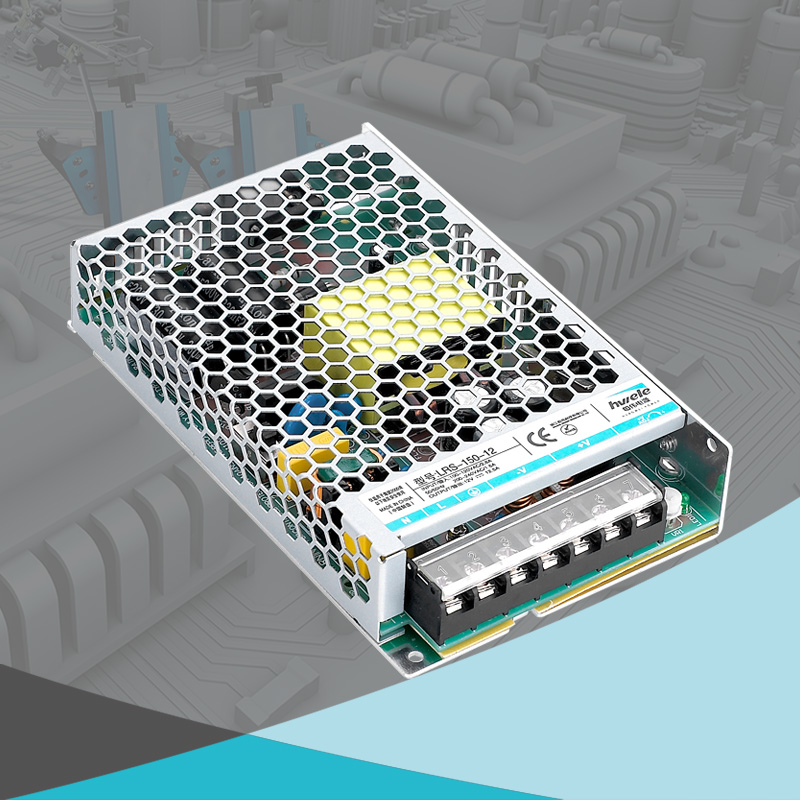
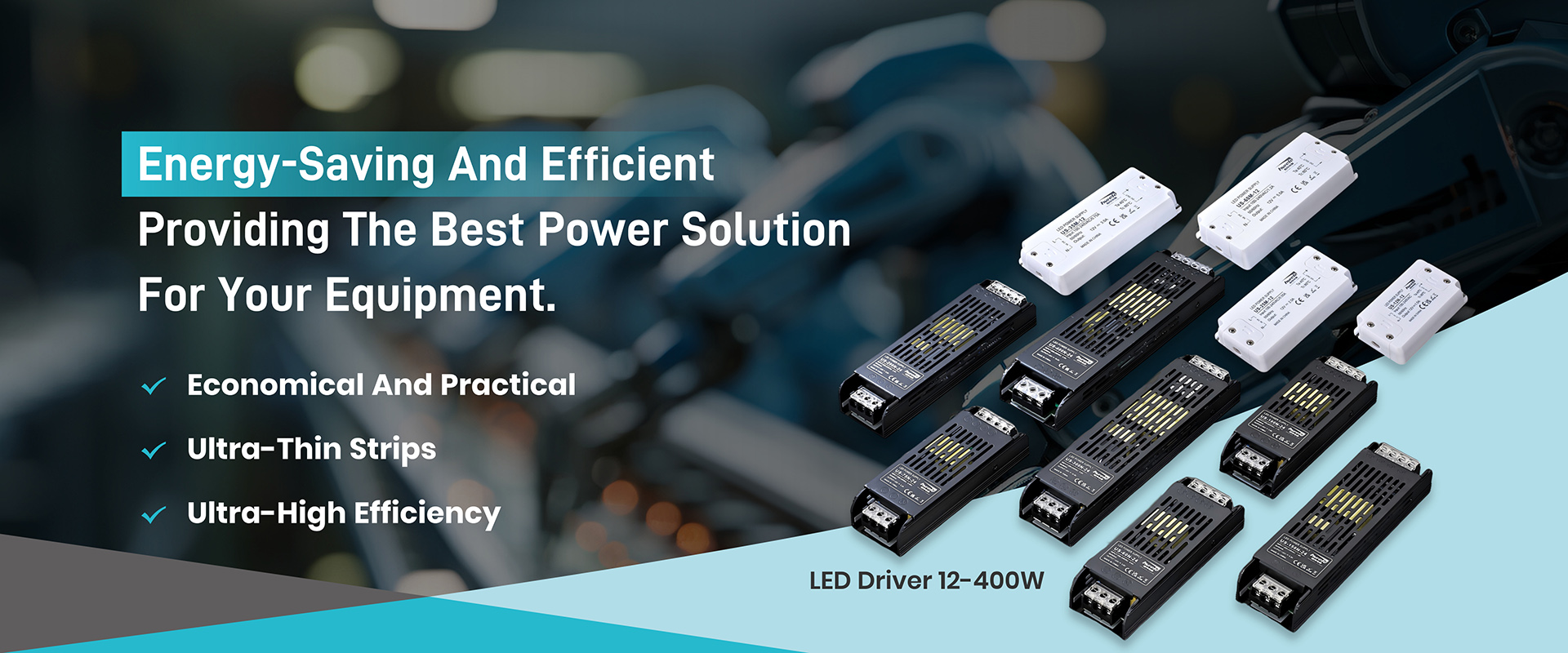
HENGWEI’s “-E” families are built around this approach. The LRS-400E 400 W ultra-thin enclosed supply and the LPV-E 100 W IP67 waterproof LED driver come from lines designed for high active efficiency and low standing loss; the LPV-E 6 W shows the same approach at the very bottom of the power range where no-load draw dominates the energy balance.
If a supplier cannot produce a DoC that names those three things, treat the 0.5 W claim as unverified.
Compliance is not a badge you print; it lives in the paperwork. Under the Ecodesign and CE regime the manufacturer — or, where the manufacturer is outside the EU, the importer or distributor placing the product on the market — carries legal responsibility for conformity. That means the Declaration of Conformity and technical file must exist before a shipment is accepted, not after customs asks for them.
The technical file should contain the product description, the standards applied, the efficiency and no-load calculations, the test reports, and design information sufficient to show how the requirements were met. In practice, the three documents a buyer should keep on file are the DoC, the ErP test data with the measurement condition stated, and the model-specific datasheet.
Q: Is the 0.5 W limit universal?
A: No. It depends on the product category and the applicable regulation. Separate LED control gear under (EU) 2019/2020 and many external power supplies are held to 0.5 W no-load, with tighter values in some categories; industrial built-in supplies sold as components are treated differently. Verify against the regulation that covers your product.
Q: What is the difference between no-load, standby and off-mode?
A: No-load means mains connected with nothing on the output. Standby means idle and waiting for a control signal. Off-mode means switched off but still connected. They are measured and capped differently, so a datasheet must state which condition its figure refers to.
Q: Who is legally responsible for compliance?
A: The manufacturer, or where the manufacturer is outside the EU, the importer or distributor placing the product on the market. That party holds the Declaration of Conformity and the technical file.
Q: Does HENGWEI provide ErP documentation?
A: HENGWEI supplies -E series and high-efficiency enclosed and LED driver families designed for low standing loss. Request the model-specific no-load test data and Declaration of Conformity for the market you are selling into.


 Optimized by Seraphinite Accelerator