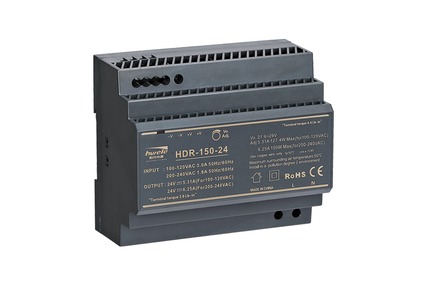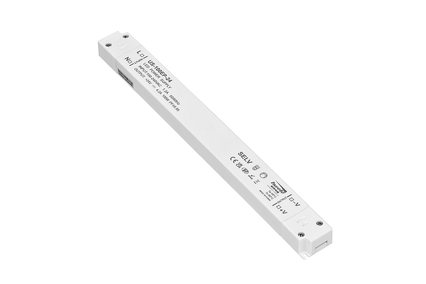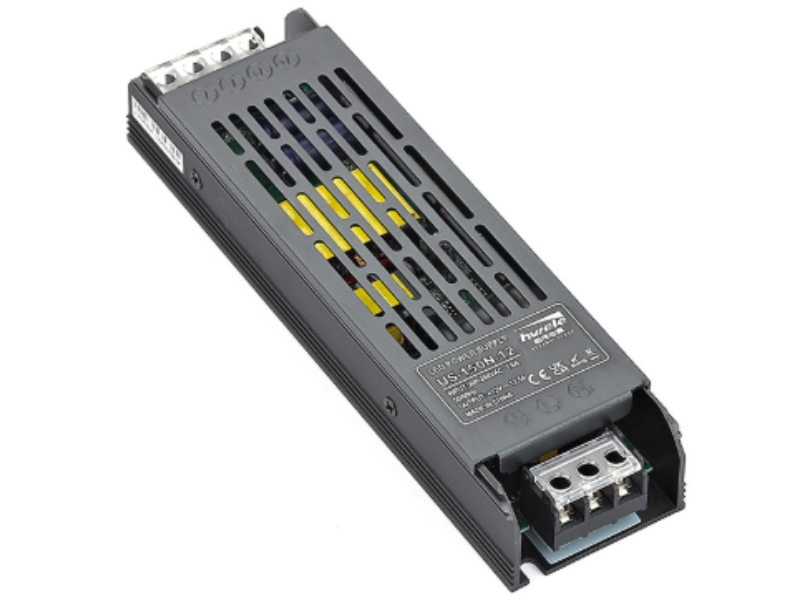


When engineering massive outdoor digital billboards, stadium LED tickers, or city-scale architectural lighting arrays, environmental protection is paramount. Hardware integration teams are frequently forced to navigate a critical, high-stakes supply chain crossroad: Should the system utilize an IP67 fully encapsulated waterproof driver, or an open convection-cooled louvered rainproof power supply?
Misinterpreting these protection topologies often results in catastrophic field failures. Deploying an unpotted supply inside a high-humidity coastal zone triggers premature oxidation and early component short-circuits. Conversely, over-specifying a project with fully sealed waterproof components when a structural rainproof layout would suffice can inflate Bill of Materials (BOM) logistics budgets by thousands of dollars unnecessarily.
To optimize total cost of ownership (TCO) without sacrificing structural uptime, procurement directors must evaluate these two power conversion architectures through the lenses of material science, thermodynamic behavior, and mechanical defense strategy.
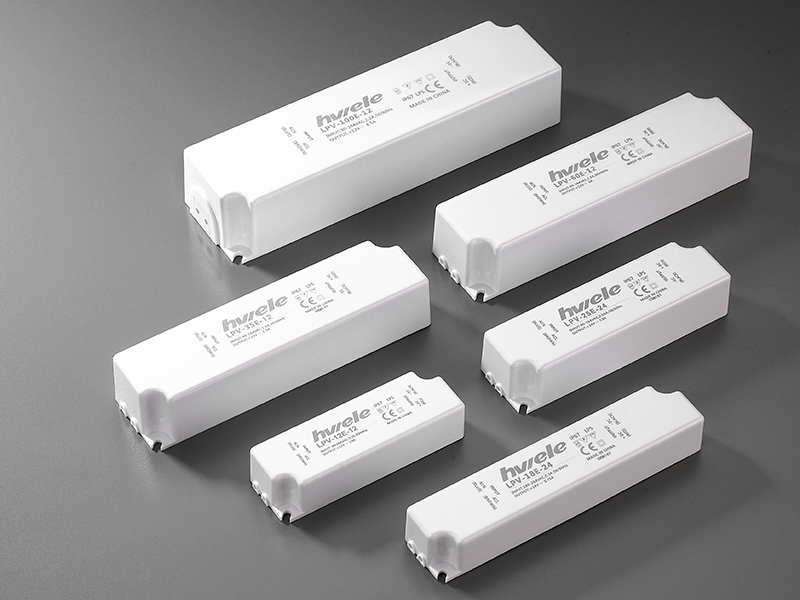
An **IP67 waterproof** rating represents the highest tier of baseline environmental protection available for commercial electronic infrastructure. The first digit (“6”) denotes total immunity against dust ingress, while the second digit (“7”) guarantees survivability during temporary submersion in water up to 1 meter deep for 30 minutes.
Achieving this level of environmental isolation requires an advanced manufacturing protocol known as solid encapsulation potting. During assembly, the entire populated printed circuit board (PCB) is enclosed in a rugged aluminum casing. An automated injection system then floods the interior chamber with a highly specialized, heavy-duty solid silicone or polyurethane thermal gel.
This gel cures into an airtight, solid barrier that seals every resistor, capacitor, and semiconductor trace away from the ambient environment. For high-humidity deployments, marine infrastructure, landscape fountains, and tightly sealed metal cabinets where zero airflow exists, sourcing a high-tier Waterproof LED Driver is the only reliable way to guarantee long-term operational integrity.
Because an IP67 driver features an airtight chassis with no ventilation slots, it cannot utilize convective airflow for heat dissipation. Instead, heat generated by the power components must migrate via conduction through the internal potting silicone compound to reach the external heavy-duty aluminum enclosure. This places strict physical caps on maximum wattage capacities for standard profiles, typically spanning a precise **6W to 320W** spectrum.
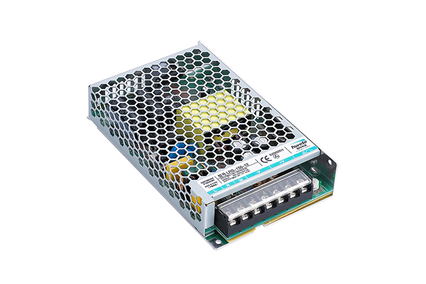
For high-power outdoor digital signage, large-format billboard frameworks, and commercial moving video walls demanding high raw energy output, full silicone potting becomes logistically and financially restrictive. This is where the **louvered rainproof power supply** (typically maintaining an IP23 or IP33 rating) excels.
Instead of relying on chemical potting compounds to seal the internal electronics, a rainproof architecture leverages smart physical geometry. The chassis uses uniquely engineered downward-slanted metal louver vents. This strategic mechanical design uses gravity to ensure that falling rainwater or vertical condensation droplets are naturally deflected away from internal live electrical traces.
Because the vents remain physically open to the outside air, the internal electronics benefit from rapid, unhindered natural convection cooling. This thermodynamic advantage allows a premium Rainproof Power Supply to easily deliver high output thresholds from **350W to 400W** at a highly competitive cost-per-watt ratio.

A key challenge with unpotted outdoor electronics is the ambient “breathing effect.” During daytime operation under full solar loading, internal cabinet temperatures rise sharply. At night, as temperatures plummet, the cooling housing contracts, drawing humid exterior air inside. This temperature shift can trigger internal condensation, causing moisture droplets to form directly on electronic components.
To counter this specific risk, premium rainproof manufacturers apply a specialized protective measure: PCB conformal semi-potting coating. By spraying a high-grade moisture-resistant conformal film over the vital component layout, the power supply gains reliable protection against condensation short-circuits while retaining open louver pathways for maximum thermal dissipation efficiency.
To streamline technical evaluation workflows for your next sourcing project, this matrix cross-references both outdoor power topologies against vital operational parameters:
| Performance Criteria | IP67 Fully Potted Waterproof | Louvered Convection Rainproof |
|---|---|---|
| Ingress Protection Grade | IP67 (Submersion Safe) | IP23 / IP33 (Vertical Rain Proof) |
| Primary Thermal Path | Solid Gel Conduction | Direct Air Convection |
| Typical Wattage Envelope | 6W to 320W | 350W to 400W+ |
| Relative Component Cost | Higher (Due to premium silicone mass) | Highly Economical Cost-Per-Watt |
| Optimal Target Use Case | Fountains, high-salt coastlines, sealed micro-boxes | Outdoor matrix billboards, perimeter display walls |
For enterprise procurement teams, consolidating component acquisition under a single verified manufacturer streamlines quality control and minimizes supply chain friction. Zhejiang Hengwei Technology (Hwele) balances these technical needs by producing both high-tier outdoor families from an automated 6,000m² manufacturing facility.
Hwele utilizes automated silicone gel dispensing systems to guarantee uniform bubble-free insulation across its **6W to 320W Waterproof LED Drivers**. Concurrently, Hwele’s **350W to 400W Rainproof Power Supplies** utilize advanced geometric tooling alongside high-grade conformal anti-moisture treatments. Backed by rigorous active burn-in testing labs and global safety credentials (CE, TUV, UL, ROHS), Hwele delivers consistent component quality and stable lead times across your entire project bill of materials.
Stop risking early field failure due to moisture ingress or poor thermal design. Partner with an established factory manufacturer capable of delivering premium fully potted IP67 modules and high-efficiency convection rainproof solutions.
Q1: Can a louvered rainproof power supply be installed completely flat in an outdoor setup?
A: No. Louvered rainproof power supplies rely on gravity to slide water away from their downward-slanted vents. Mounting them flat or horizontally compromises this physical boundary, allowing rain to flow directly onto the internal PCB. They must always be installed vertically.
Q2: Why are IP67 waterproof drivers generally more expensive per watt than rainproof modules?
A: The price difference stems from premium raw material requirements. IP67 units require an airtight aluminum shell completely filled with specialized, high-grade solid silicone thermal gel to facilitate heat transfer via conduction, which increases production costs compared to open convection chassis designs.
Q3: How does coastal salt fog affect unpotted louvered rainproof power supplies?
A: Airborne salt fog carries corrosive ions that accelerate the oxidation of exposed metals. For installations within 5 kilometers of a coastline, fully potted IP67 hardware is highly recommended to completely seal vulnerable components away from atmospheric salt spray.
Q4: Do Hwele rainproof modules include built-in protection against daytime condensation?
A: Yes. Hwele applies a premium moisture-resistant conformal coating to the component layout of its rainproof series. This provides an effective shield against day-to-night condensation cycling while preserving open convective airflow channels.


 Optimized by Seraphinite Accelerator