

Industrial power supplies are expected to operate continuously, often under demanding conditions. Heat, electrical noise, vibration, humidity, and dust are common challenges in factories and automation systems. While internal circuit design is important, the enclosure material directly affects heat dissipation, safety, durability, and long term reliability.
Many buyers focus on price first and choose a power supply without considering whether aluminum or plastic housing is more suitable. This often leads to issues later. In this guide, we compare aluminum vs plastic power supply housings in a clear and practical way so you can make an informed decision.
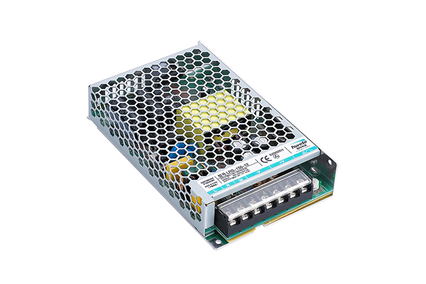
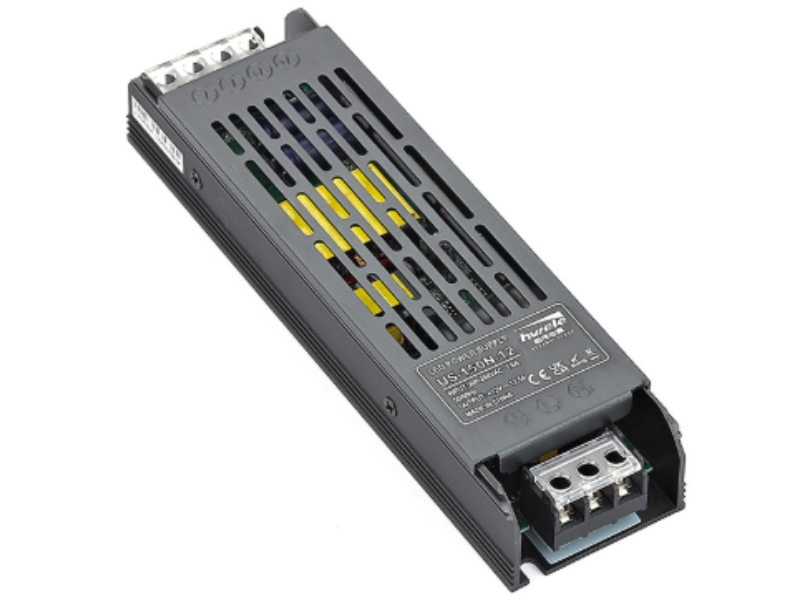
An aluminum power supply uses a metal enclosure, usually made from aluminum alloy, to protect its internal electronic components. This type of housing is widely used in industrial power supply applications where reliability, heat management, and mechanical strength are important.
Aluminum has good thermal conductivity, which allows heat generated inside the power supply to spread across the enclosure and dissipate more effectively into the surrounding air. This makes aluminum housings suitable for higher power systems and for applications that run continuously over long periods.
In industrial environments, aluminum power supplies are also chosen for their strong and rigid structure. The metal enclosure helps protect internal components from vibration, impact, and long-term mechanical stress. Because of these advantages, aluminum power supplies are commonly used in automation systems, control cabinets, and outdoor or semi-outdoor installations.

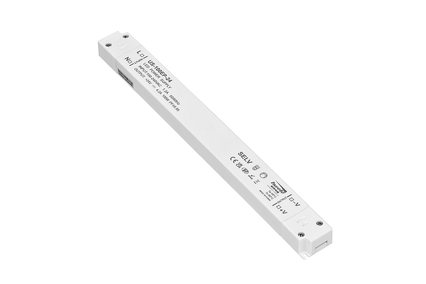
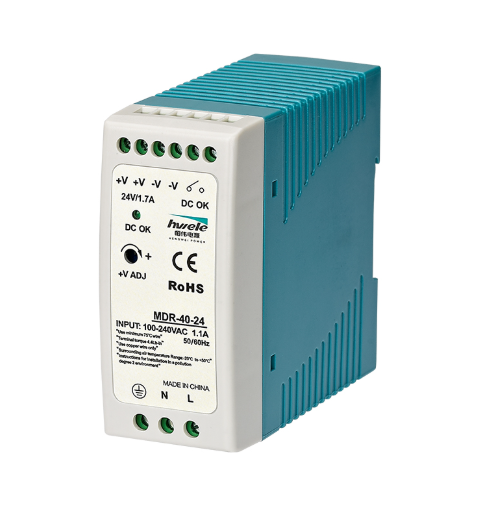
A plastic power supply uses an enclosure made from materials such as ABS or polycarbonate. Plastic housings are lightweight and naturally electrically insulating, which makes them suitable for many indoor and lower power applications.
Plastic power supplies are often used in cost-sensitive projects and environments where conditions are stable and well controlled. Their lighter weight makes installation easier, especially in compact equipment or wall-mounted devices.
Because plastic does not conduct electricity, plastic power supplies provide good electrical insulation by default. This can improve safety in some applications. However, plastic does not dissipate heat as efficiently as aluminum, so plastic housings are usually better suited for lower power levels or intermittent operation.
| Difference | Aluminum Power Supply | Plastic Power Supply | What Buyers Should Consider |
| Heat Dissipation | Excellent heat dissipation due to metal housing | Poor heat dissipation, relies more on internal airflow | For high power or continuous operation, aluminum is safer |
| Electrical Safety | Conductive housing, must be properly grounded | Non-conductive and naturally insulated | Plastic is simpler for low-risk indoor systems |
| EMI / Noise Protection | Provides natural EMI shielding | Little to no EMI shielding | Aluminum is better for PLCs and sensitive control systems |
| Strength and Durability | Strong and rigid, resists vibration and impact | Lightweight but can crack or deform over time | Aluminum suits harsh industrial environments |
| Outdoor and Environmental Resistance | Performs well in heat, humidity, and dust | Limited outdoor resistance, UV aging possible | Aluminum is preferred for outdoor or humid areas |
| Weight and Installation | Heavier but stable in fixed installations | Lightweight and easy to handle | Plastic works well for small or portable equipment |
| Cost and Long-Term Value | Higher upfront cost but longer lifespan | Lower initial cost but shorter service life | Consider total cost, not just purchase price |
| Customization and Appearance | Easy machining, professional industrial look | Flexible shapes and colors | Choose based on branding and design needs |
Heat dissipation is one of the most important differences between aluminum and plastic power supplies.
Aluminum has excellent thermal conductivity. This allows heat generated by internal components to spread across the enclosure and dissipate into the surrounding air. In high power or continuous operation systems, this helps reduce internal temperature and extend component life.
Plastic has very low thermal conductivity. Heat tends to remain inside the enclosure, which can lead to higher internal temperatures if the design is not optimized. Plastic power supplies rely more on internal airflow or external cooling to manage heat.
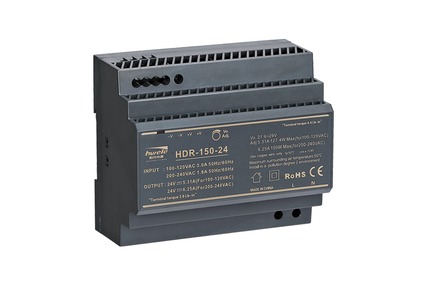
In industrial cabinets with limited ventilation, aluminum power supply housings are often preferred. For compact and high load applications, Hengwei Enclosed Power Supply 10–600W series uses aluminum housing to improve heat dissipation and long term stability.
Electrical safety is another key factor.
Plastic is naturally non conductive. This means plastic power supplies provide excellent electrical insulation and reduce the risk of electric shock. This can be beneficial in applications where safety and insulation are the highest priorities.
Aluminum is conductive, so aluminum power supplies must be properly grounded. When grounding is done correctly, aluminum enclosures are safe and compliant with industrial standards. However, poor grounding practices can increase risk.
In professional industrial systems, grounding is standard practice. As a result, electrical safety is usually not a limiting factor for aluminum power supplies when installed correctly.
Industrial environments are full of electrical noise from motors, inverters, relays, and switching devices. EMI can interfere with sensors, PLC communication, and control accuracy.
Aluminum enclosures provide natural shielding against electromagnetic interference. This helps reduce noise coupling and improves system stability, especially in automation systems.
Plastic enclosures do not provide EMI shielding by themselves. Additional internal filtering or shielding may be required if EMI is a concern.
For automation and control systems where signal integrity matters, aluminum housing offers a clear advantage. Hengwei DIN Rail Power Supply Aluminum Series is often used in industrial panels where EMI resistance is important.
Mechanical strength is critical in industrial settings.
Aluminum enclosures are rigid and resistant to deformation. They perform well under vibration, impact, and long term mechanical stress. This makes aluminum power supplies suitable for factory floors and machinery environments.
Plastic enclosures can absorb impact but may crack or deform over time, especially under high temperature or mechanical stress. The durability depends heavily on material quality.
For environments with vibration, heavy equipment, or frequent maintenance handling, aluminum housings provide better long term durability.
Environmental resistance includes humidity, dust, chemicals, and UV exposure.
Aluminum does not rust and naturally forms a protective oxide layer. With proper coating or anodizing, aluminum enclosures perform well in humid or outdoor environments.
Plastic does not corrode, but prolonged UV exposure and temperature cycling can cause aging or brittleness over time. Some plastics perform better than others, but outdoor performance varies.
For outdoor or semi outdoor installations, Hengwei Rainproof Power Supply ERP Series Aluminum Semi-Potted 350–400W offers better protection and environmental resistance.
Plastic power supplies are significantly lighter than aluminum ones. This reduces shipping cost and makes installation easier, especially in wall mounted or portable equipment.
Aluminum power supplies are heavier, but still relatively light compared to steel enclosures. The extra weight is often acceptable in fixed industrial installations.
For applications where weight is a major concern, plastic housings can be advantageous. For control cabinets and fixed machinery, weight difference is usually not critical.
Plastic power supplies usually have a lower initial cost. This makes them attractive for cost sensitive projects or high volume equipment.
Aluminum power supplies typically cost more upfront due to material and manufacturing processes. However, they often offer longer lifespan and better reliability.
When evaluating cost, industrial buyers should consider total cost of ownership. Downtime, replacement, and maintenance costs often outweigh initial savings.
For long term industrial use, aluminum housings often provide better value despite higher purchase price.
Aluminum enclosures are easy to machine. Holes, slots, and custom mounting features can be added easily. Aluminum also offers a more professional and industrial appearance.
Plastic enclosures are easier to mold into complex shapes and colors. This allows more design flexibility for consumer facing or compact devices.
For OEM equipment that requires branding or specific form factors, both materials can be suitable depending on design goals.
Choosing between aluminum and plastic power supplies depends mainly on the operating environment, power level, and long-term reliability requirements.
Aluminum power supplies are the better choice when heat dissipation is critical, when the system operates continuously, or when the environment is harsh. They are commonly used in industrial automation systems, machinery, outdoor equipment, and applications with high power density. If EMI resistance, mechanical durability, and long service life are important, aluminum housing is usually the right option.
Plastic power supplies, on the other hand, are more suitable for indoor applications with stable conditions and lower power levels. They are ideal for cost-sensitive projects, lightweight equipment, and situations where electrical insulation is especially important. In clean indoor environments with short or moderate duty cycles, plastic housings perform reliably when properly designed.
By matching the housing material to real operating conditions, engineers can balance performance, safety, and cost more effectively.
Aluminum power supplies are commonly used in industrial control cabinets, automation systems, outdoor equipment, and high power lighting.
Plastic power supplies are often used in indoor lighting, small automation devices, consumer electronics, and compact OEM equipment.
Hengwei industrial power supply product lines cover both aluminum and plastic housing options, allowing buyers to select the most suitable design for their application.
There is no single best choice when comparing aluminum vs plastic power supply housings. Each material serves different needs.
Aluminum power supplies offer better heat dissipation, durability, EMI protection, and long term reliability. Plastic power supplies offer lower cost, lighter weight, and excellent electrical insulation.
By understanding these 8 key differences, buyers can confidently select the right industrial power supply housing material and avoid problems before they occur. If reliability and performance matter, housing material should never be an afterthought.
Q1: Which is better for industrial use, aluminum or plastic power supplies?
A1: It depends on the application. Aluminum power supplies are better for high power, continuous operation, and harsh environments because they dissipate heat well and offer stronger protection. Plastic power supplies are suitable for indoor, lower power, and cost-sensitive applications where conditions are stable.
Q2: Do aluminum power supplies last longer than plastic ones?
A2: In most industrial environments, yes. Aluminum housings handle heat, vibration, and long-term stress better, which often results in a longer service life compared to plastic housings under the same conditions.
Q3: Are plastic power supplies safe to use in factories?
A3: Yes. Plastic power supplies are electrically insulated and safe when used within their rated power and environmental limits. They are commonly used in indoor factory control systems and lighting applications.
Q4: Which housing material is better for high power applications?
A4: Aluminum power supplies are generally preferred for high power applications because the metal housing helps release heat and maintain stable performance during continuous operation.


 Optimized by Seraphinite Accelerator