

In the contemporary landscape of industrial security, physical safety and cybersecurity have become completely intertwined. Millions of dollars are spent annually on high-definition IP cameras, biometric access control systems, and centralized network video recorders (NVRs). However, many enterprise systems maintain a critical vulnerability: their reliance on an unstable electrical grid.
As security integration experts frequently note, there is no true cybersecurity or physical surveillance without total power security. A sudden power outage, a localized grid failure, or an intentional line cut by intruders can render advanced security infrastructure useless in a matter of seconds. For procurement managers, security vendors, and system integrators, selecting a specialized security UPS power supply is not merely an optional hardware upgrade—it is a foundational requirement to ensure continuous protection.
Zhejiang Hengwei Technology (Hwele), leveraging over 20 years of precision manufacturing expertise and dual ISO-9001/ISO-14001 certified facilities, designs and manufactures high-reliability charging power supplies engineered specifically for the security sector. By balancing cost-effectiveness with stringent quality controls, Hwele provides the global supply chain with robust power solutions that eliminate surveillance gaps and protect critical infrastructure from unexpected downtime.
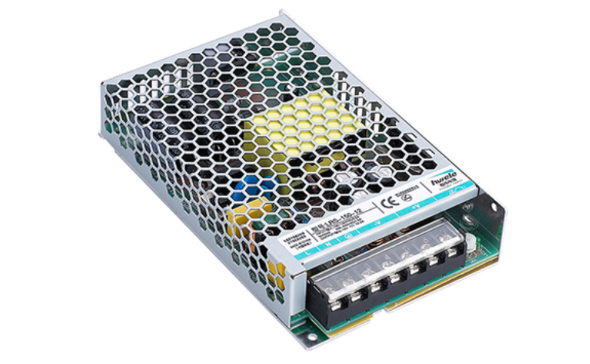
A specialized security uninterruptible power supply (UPS) module—often categorized as a charging or dual-output enclosed power supply—differs fundamentally from a standard desktop UPS or a basic AC/DC power brick. These industrial-grade modules are engineered to be hardwired directly into security control panels, weak-current distribution boxes, and outdoor surveillance enclosures.
The operational architecture of a security UPS power supply relies on an intelligent dual-loop system:
Primary Loop (AC to DC Operation): Under normal operating conditions, the power supply draws standard alternating current (AC) utility power and converts it into highly stabilized, low-noise direct current (DC) power (typically 12V or 24V). This primary output continuously drives the connected cameras, electronic locks, and control boards.
Secondary Loop (Battery Charging Management): Simultaneously, the module routes a precisely regulated auxiliary current to an external backup battery (such as a sealed lead-acid or lithium iron phosphate battery), maintaining it at an optimal float-charge level.
The defining feature of an industrial security UPS, such as the Hwele Enclosed Security Power Series, is its instantaneous, millisecond-level transfer switch. The moment the primary AC utility power drops below a critical threshold or fails entirely, the internal control circuitry automatically shifts the system’s power draw to the backup battery. This transition happens so quickly that precision microprocessor-controlled security systems experience zero resets, avoiding data corruption and keeping the entire security perimeter live.
Modern security networks are highly complex digital ecosystems. Understanding why a dedicated backup power supply is essential requires examining the operational vulnerabilities that appear across a facility when power is compromised:
Modern IP security cameras do not simply stream video; they run onboard edge analytics, manage complex encoding protocols, and write data continuously to local storage arrays or centralized network storage. When a standard power supply loses power abruptly, the immediate consequence is an unrecorded blind spot during a critical event.
Furthermore, abrupt shutdowns frequently trigger filesystem errors on storage drives. When power returns, IT teams often find corrupted video files or face lengthy system disk checks, which can keep surveillance networks offline for hours. A reliable charging power supply ensures that recorders can continue writing video files without interruption during brief localized outages.
Access control systems present a unique dual challenge during power anomalies: they must balance physical security with life-safety compliance. Electronic locking mechanisms generally fall into two categories:
Fail-Safe Locks (e.g., Magnetic Locks): These require continuous electrical current to remain locked. If power fails, the doors unlock automatically to allow safe emergency egress. However, without a battery backup, a brief power blip will leave an entire facility completely unsecured against unauthorized entry.
Fail-Secure Locks (e.g., Electronic Strikes): These require power to unlock and remain locked when power is lost. During a power failure, occupants can become trapped inside specific zones unless manual overrides are used, presenting a major safety hazard.
By deploying an access control power supply with battery backup, integrators ensure that electronic locks remain fully functional and manageable via network software throughout a power emergency, preserving both facility security and occupant safety.
Industrial zones and commercial smart buildings are filled with heavy inductive loads, such as large HVAC compressors, elevators, and industrial machinery. The starting and stopping of these machines injects severe voltage surges, sags, and transient spikes into the electrical grid.
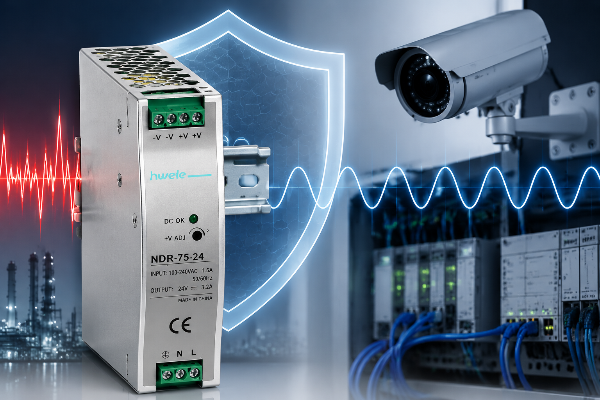
The advanced filtering circuitry found within enclosed security power units acts as a continuous buffer, smoothing out these minor grid anomalies before they can reach and degrade the sensitive microchips inside expensive IP cameras or control panels.
[Normal AC Power]  ──> [Hwele Security UPS Module] ──> Stable 12V/24V DC ──> [CCTV / Access Control]
                                │
                                └──> Intelligent Floating Charge ───────> [Backup Battery Stack]

[AC Power Fails]   ──> [Instant Millisecond Switch] ──> Battery Power   ──> Continuous Surveillance
While backup batteries are essential for emergency runtime, their operational life is heavily dependent on the charging electronics regulating them. Poorly designed charging modules often overcharge batteries in warm climates or fail to prevent deep discharging, leading to premature battery failure long before its expected service life ends.
To solve this persistent industry problem, Hwele integrates an intelligent battery management system (BMS) directly onto the circuit board of its security power modules:
Over-Charge Protection: Once the backup battery reaches full capacity, the circuit automatically scales down the current to a minimal trickle charge, preventing internal overheating and electrolyte boiling.
Over-Discharge Protection (Low Voltage Cut-off): If an extended power outage forces the system to run on battery power for hours, the module continuously monitors the battery’s dropping voltage. To prevent permanent cellular damage caused by deep draining, the power supply safely disconnects the load once the battery drops past a critical low threshold.
Battery Reverse Polarity Protection: During fast-paced field installations or high-stress maintenance routines, technicians can occasionally miswire positive and negative battery terminals. Hwele’s built-in reverse polarity protection ensures that a wiring mistake will not burn out the power supply or damage connected field devices.
Every Hwele manufacturing run utilizes high-precision automated assembly equipment, including Samsung SMT lines and computerized wave-soldering stations. Before packaging, every security power module undergoes rigorous testing inside automated electronic aging bays and high-low temperature test chambers. This level of quality verification ensures that when a critical facility loses utility power, the backup charging system activates exactly as engineered.

To assist procurement managers and system architects in selecting the optimal configuration for their distribution panels, the following reference table details the core specifications of standard industrial security charging modules:
| Hwele Standard Model Family | Total Power Output | Channel 1 (Device Output) | Channel 2 (Battery Charging) | Key Safety Certifications | Ideal Application Scenarios |
| SC-35 Series | 35W | 13.8V / 2.0A | 13.4V / 0.5A | CE, ROHS, 3C | Small residential access control, single-door entry gates, intercom systems. |
| SC-60 Series | 60W | 13.8V / 4.0A | 13.4V / 0.5A | CE, EMCD, LVD | 4-Channel local CCTV DVR setups, commercial biometric terminals, security alarms. |
| AD-155 Series Dual Output | 155W | 13.8V / 11.5A | 13.4V / 0.5A | UL, TUV, CE, KC | Large multi-camera arrays, 16-channel NVR enclosures, centralized smart building lockers. |
When reviewing international system upgrades, sourcing an optimized SC-60-12 power supply alternative from Hwele allows procurement departments to retain necessary safety certifications—such as CE and TUV compliance—while achieving a highly efficient, cost-effective bill of materials (BOM) for large-scale municipal or corporate rollouts.
A: Hwele security UPS power modules are designed with a high-speed automatic transfer switch that completes the transition to battery backup in less than 10 milliseconds. For standard security equipment, including digital video recorders, IP cameras, and network switches, this speed ensures uninterrupted operation with zero data drop or hardware resets.
A: Yes. The compact, ventilated enclosed metal chassis is engineered for easy installation inside standard electrical enclosures. The rugged aluminum or galvanized steel housing provides effective heat dissipation and structural rigidity, making it suitable for deployment within ventilated outdoor pole-mounted monitoring boxes used in city surveillance or perimeter detection.
A: The primary channel always takes priority to ensure your cameras and locks receive stable, uncompromised power. The secondary charging channel uses the remaining available power to safely recharge or float-charge the battery. When selecting a power module, it is recommended to calculate the total continuous current draw of your security devices and leave a 20% safety margin above that figure.
A: Absolutely. With an established global sales and technical engineering network serving clients across North America, Europe, and Asia, Hwele provides comprehensive technical consultation for high-volume B2B orders. We work directly with security system vendors to verify compliance, matching appropriate amperage ratings and mounting configurations to your exact project requirements.
The fundamental integrity of an enterprise security network depends on the consistency of its power source. Relying on standard, unshielded power converters leaves valuable infrastructure exposed to power grid fluctuations, localized blackouts, and intentional tampering. Upgrading to an industrial-grade security UPS power supply protects cameras, access control systems, and data storage systems from unexpected interruptions.
Partnering with an experienced manufacturer like Zhejiang Hengwei Technology gives system integrators and global procurement managers direct access to certified, reliable, and cost-effective charging power solutions. By integrating smart battery management, comprehensive circuit protection, and verified compliance markings into your hardware supply chain, you ensure your security infrastructure remains fully operational when it matters most.
Ready to secure your surveillance infrastructure with professional charging power modules?
👉 Explore Hwele’s Complete Range of Enclosed Security and UPS Power Supplies


 Optimized by Seraphinite Accelerator