

Choosing the right power supply is not just a technical detail. It directly affects product reliability, system safety, and long term operating cost. Many buyers assume that all power supplies work the same way, but the difference between an industrial power supply and a commercial power supply is significant. System integrators, product designers, and electrical engineers often face this decision when developing new equipment or upgrading existing systems. Using the wrong type of power supply can lead to overheating, frequent failure, certification issues, and unexpected downtime.
Power supplies are the backbone of any electrical system. They convert input power into a stable output that electronic devices can safely use. While this basic function is the same, the conditions under which power supplies operate vary greatly. Commercial environments such as offices, homes, and retail spaces are relatively clean and stable. Industrial environments such as factories, automation lines, and control cabinets are far more demanding. Because of this difference, AC DC industrial power supply products are designed very differently from commercial power adapter solutions. Understanding these differences helps buyers avoid costly mistakes.
A commercial power supply is designed for general use in low stress environments. These power supplies are commonly used in consumer electronics, office equipment, and light commercial products.
Commercial power supplies are typically compact, lightweight, and optimized for cost. They are often designed to operate under stable input voltage and moderate ambient temperatures.
Many commercial power supplies are external adapters or small enclosed units. They are suitable for devices that operate intermittently and do not require continuous high load operation.
While commercial power supplies are reliable within their intended use, they are not designed for harsh or demanding environments.

An industrial power supply is designed for continuous operation in harsh environments. These power supplies are commonly used in automation systems, machinery, control panels, and industrial equipment.
Industrial power supplies are built to handle wide input voltage ranges, high ambient temperatures, electrical noise, and continuous full load operation.
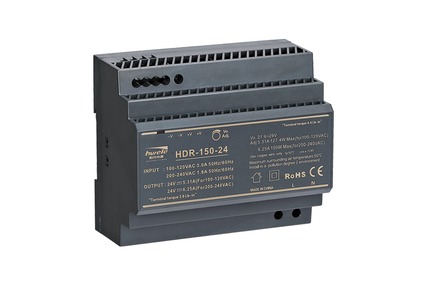
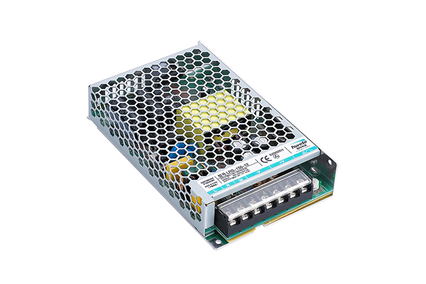
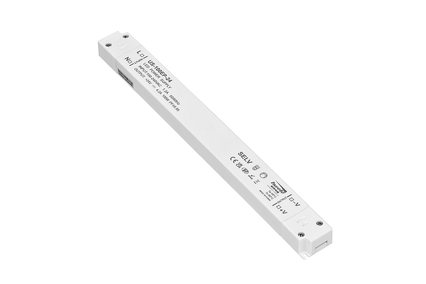
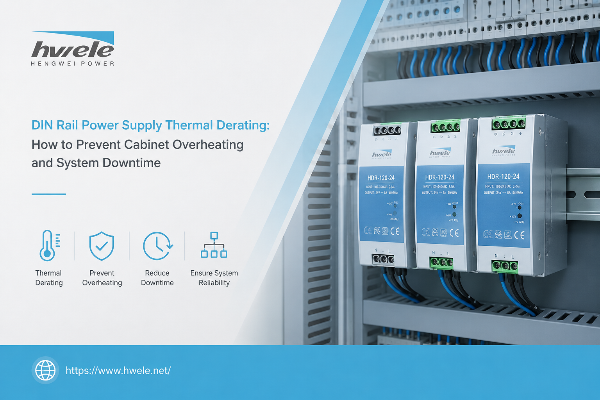
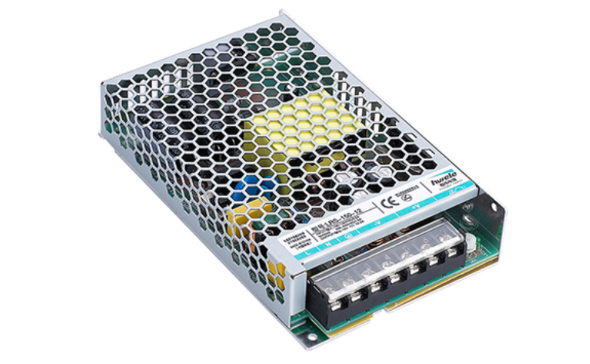
Products such as Hengwei LRS Ultra-thin Enclosed Switching Power Supply and Hengwei DIN Rail Power Supply Series are designed to operate reliably in demanding industrial conditions.
Industrial power supplies focus on long term stability, protection, and safety rather than minimum cost.
| Key Difference | Commercial Power Supply | Industrial Power Supply |
| Power Capacity and Load Handling | Designed for light to moderate loads and intermittent use | Designed for continuous full load operation |
| Voltage Range and Input Flexibility | Narrow input voltage range, assumes stable power | Wide input voltage range to handle unstable power conditions |
| Operating Environment | Suitable for clean, dry, temperature controlled environments | Built for harsh environments with dust, heat, vibration, and humidity |
| Reliability and Duty Cycle | Intended for short or intermittent operating cycles | Designed for 24 hour continuous operation |
| Protection and Safety Features | Basic protections such as short circuit and over voltage | Advanced protections including overload, over temperature, and surge protection |
| Mechanical Strength and Housing | Lightweight plastic or simple enclosures | Robust metal housing for better protection and heat dissipation |
| Certifications and Compliance | Meets general consumer safety standards | Meets stricter industrial safety and EMC standards |
| Cost and Long Term Value | Lower initial cost but shorter service life in harsh use | Higher initial cost but better long term reliability and value |
Commercial power supplies are usually designed for light to moderate loads. They perform well when operating below their maximum rated power.
Industrial power supplies are designed to handle continuous full load operation. They can deliver stable output even when operating near rated capacity for long periods.
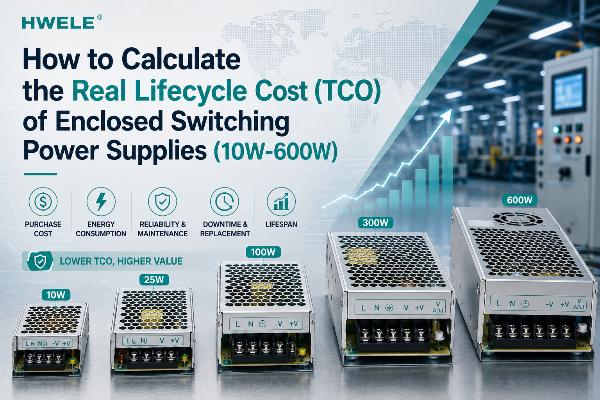
For example, Hengwei Ultra-thin Enclosed Power Supply 200W to 600W models are designed for continuous industrial use without performance degradation.
Commercial power supplies typically operate within a narrow input voltage range. They assume stable power from residential or office electrical systems.
Industrial power supplies support wide input voltage ranges to handle unstable or fluctuating power conditions.
Wide input capability allows industrial systems to operate reliably in different regions and under poor power quality conditions.
Commercial power supplies are designed for clean, dry, temperature controlled environments.
Industrial power supplies are built to withstand dust, vibration, humidity, and high ambient temperatures.
Metal enclosures, reinforced components, and advanced thermal design allow industrial power supply products to operate in harsh conditions where commercial units would fail.
Commercial power supplies are designed for intermittent use. They may not perform well under continuous operation.
Industrial power supplies are designed for 24 hour operation, 7 days a week. Components are selected for long service life and thermal stability.
This makes AC DC industrial power supply solutions ideal for automation, control systems, and production equipment.
Commercial power supplies often include basic protection such as over voltage and short circuit protection.
Industrial power supplies include advanced protection features such as overload protection, over temperature protection, surge protection, and input isolation.
These protections safeguard both the power supply and connected equipment, reducing the risk of system failure.
Commercial power supplies often use plastic housings or simple enclosures.
Industrial power supplies typically use metal enclosures that provide mechanical protection and better heat dissipation.
Products like Hengwei Ultra-thin Enclosed Switching Power Supply use robust housings suitable for mounting inside control cabinets.
Commercial power supplies usually meet basic consumer safety standards.
Industrial power supplies comply with stricter industrial standards related to safety, electromagnetic compatibility, and reliability.
Certifications are critical for industrial equipment used in regulated industries.
Commercial power supplies have lower initial cost but may fail sooner in demanding environments.
Industrial power supplies have higher upfront cost but provide better long term value due to reliability, lower maintenance, and reduced downtime.
In industrial systems, long term stability is often more important than initial price.
Commercial power supplies are suitable when operating conditions are stable and demands are low. They are ideal for consumer products, office equipment, and applications where failure does not result in serious consequences. For light duty applications, a commercial power adapter can be a cost effective solution.
Industrial power supplies should be chosen for systems that require continuous operation, high reliability, and environmental resistance.
Automation equipment, control cabinets, machinery, and industrial lighting systems benefit from industrial grade power supplies.
Hengwei Industrial Power Supply solutions are designed specifically for these demanding applications.
One common mistake is selecting a power supply based only on rated power. Another mistake is using a commercial power supply in an industrial environment, leading to early failure. Buyers also underestimate environmental factors such as temperature, vibration, and electrical noise. Understanding real operating conditions is critical.
Choosing the right power supply starts with understanding the application.
Engineers should evaluate load requirements, duty cycle, environment, and safety standards.
Industrial applications benefit from selecting proven products such as Hengwei LRS Series Ultra-thin Power Supply, Hengwei DIN Rail Power Supply solutions, and Aluminum Waterproof Switching Power Supply.
Proper selection ensures stable operation and long service life.

The difference between industrial power supply and commercial power supply products goes far beyond size and price. It reflects how and where the power supply is expected to operate.
Commercial power supplies are designed for stable, low stress environments and intermittent use. Industrial power supplies are built for harsh conditions, continuous operation, and long term reliability.
For system integrators, product designers, and electrical engineers, choosing the right power supply is a critical design decision. Using an industrial grade solution where reliability matters reduces downtime, protects equipment, and lowers long term cost.
With a wide range of industrial power supply solutions, including Hengwei Ultra-thin Enclosed Switching Power Supply, Hengwei DIN Rail Power Supply, and wide voltage input models, Hengwei supports reliable power delivery for real world industrial applications.
Selecting the right power supply at the design stage ensures that systems perform safely, efficiently, and reliably throughout their service life.
Q1: Can a commercial power supply be used in an industrial environment?
A1: In most cases, no. Commercial power supplies are not designed to handle high temperature, dust, vibration, or continuous full load operation, which are common in industrial environments.
Q2: Why do industrial power supplies support a wider input voltage range?
A2: Industrial environments often have unstable or fluctuating power. A wide input voltage range allows the AC DC industrial power supply to operate reliably even when input voltage changes.
Q3: Do industrial power supplies include more protection features?
A3: Yes. Industrial power supplies typically include overload, over temperature, over voltage, and short circuit protection to protect both the power supply and connected equipment.


 Optimized by Seraphinite Accelerator