

Five years ago, specifying a PF > 0.90 LED driver was considered premium. Today, for any commercial lighting project exceeding 25W per fixture, PF > 0.95 with active PFC is rapidly becoming the procurement floor — not the ceiling.
Three forces are driving this shift:
Procurement Reality: In 2026, over 72% of new commercial lighting tenders in the EU, GCC, and North America explicitly require LED drivers with active PFC and PF ≥ 0.95. Submitting a bid with passive-PFC or low-PF drivers is an automatic disqualification.
Power factor (PF) is the ratio of real power (watts, W) — the power that actually does useful work — to apparent power (volt-amperes, VA) — the total electrical capacity the circuit must carry.
In an ideal world, PF = 1.0: every volt-ampere drawn from the grid is converted into useful watts. But LED drivers are non-linear loads. Their internal rectifier bridge only conducts current near the peak of each AC half-cycle, producing short, high-amplitude current pulses rather than a smooth sine wave. This creates two problems:
A driver without any power factor correction typically operates at PF 0.50–0.65. That means nearly half the apparent power drawn from the grid is wasted as reactive circulating current.
Active Power Factor Correction is an electronic circuit — typically a boost converter — placed between the input rectifier and the main DC-DC converter stage of the LED driver. It uses a dedicated PFC controller IC (such as the TI UCC28019 or ST L6562) to actively shape the input current waveform.
Here’s how it works, step by step:
There are three main operating modes for active PFC controllers:
| Mode | How It Works | Typical Application |
|---|---|---|
| DCM (Discontinuous Conduction) | Inductor current falls to zero after each PWM cycle. Simple control, zero-current switching for low losses. | Sub-150W drivers; cost-sensitive designs. Higher EMI, larger inductor. |
| CCM (Continuous Conduction) | Inductor current never reaches zero. Very low input ripple current = minimal EMI. | 150W+ drivers; high-power commercial/industrial. More complex control, higher switching losses. |
| CrM / TM (Critical Conduction / Transition Mode) | Operates at the boundary between DCM and CCM. Variable frequency. Good balance of efficiency and EMI. | 25–200W LED drivers. Widely used in commercial lighting due to cost-performance balance. |
Not all power factor correction is created equal. Understanding the difference between passive and active PFC is critical when evaluating supplier quotations.
| Parameter | Passive PFC | Active PFC |
|---|---|---|
| How it works | Line-frequency inductor or capacitor network that smooths the current waveform | Boost converter with dedicated controller IC that actively shapes current into a sine wave |
| Typical PF achieved | 0.70 – 0.85 (valley-fill: up to 0.90) | 0.95 – 0.99 |
| THD (harmonics) | 30% – 50% (high harmonic injection) | < 10% – 15% (low harmonic injection) |
| BOM cost adder | $0.30 – $0.50 | $1.50 – $3.00 |
| Size & weight | Large, heavy inductor (bulky for >100W) | Compact; small ferrite-core inductor at high frequency |
| PF at partial load | Degrades significantly below 50% load | Maintains ≥ 0.95 down to 20–30% load in quality designs |
| Universal input (90–264V) | Often 230V-only; may lack PFC at 115V | Full-range; active PFC provides inherent universal-input capability |
| Regulatory compliance | Fails IEC 61000-3-2 Class C for loads >25W | Meets or exceeds IEC 61000-3-2, DLC Premium, ErP Directive |
| Best for | Sub-25W residential; triac-dimmable retrofit bulbs | All commercial/industrial LED lighting >25W |
Red Flag: A supplier quoting “PF 0.88 with PFC” is almost certainly using passive correction. If your project specifies PF ≥ 0.95, passive PFC cannot deliver. Always confirm whether the driver uses active PFC — not just “PFC” generically.
If you are exporting LED lighting products or bidding on international commercial projects, the PF requirements are not suggestions — they are legally binding compliance thresholds. Below is the current regulatory matrix as of mid-2026:
| Region / Standard | PF Threshold | Applies To | THD Limit |
|---|---|---|---|
| EU — IEC 61000-3-2 Class C | ≥ 0.90 (P > 25W) ≥ 0.95 (P > 75W, many tenders) | All lighting equipment sold in EU/EEA | Per harmonic order limits (Class C table) |
| EU — ErP Directive (EU) 2019/2020 | ≥ 0.90 (P > 25W) | Light sources and separate control gear | Not directly specified; via IEC 61000-3-2 |
| North America — DLC Premium V5.1 | ≥ 0.90 | Qualified commercial luminaires | ≤ 20% |
| North America — ENERGY STAR Lamps V2.2 | ≥ 0.90 | Integral LED lamps >5W | ≤ 20% (for lamps >5W) |
| GCC — DEWA (Dubai) | ≥ 0.95 (recommended) 0.90–1.0 (minimum) | Major projects; point of common coupling | Per DEWA Major Projects Guidelines |
| GCC — KAHRAMAA (Qatar) | 0.90–1.0 lagging | All installations per Wiring & Conservation Code 2023 | Per IEC 61000-3-2 |
| GCC — SEC (Saudi Arabia) | ≥ 0.90 (trending to 0.95) | Commercial customers; penalties below threshold | Per IEC standards |
| China — GB 17625.1 / GB 30255 | ≥ 0.90 (commercial/industrial) ≥ 0.95 (many municipal tenders) | Indoor LED lighting products (energy label mandatory from Sept 2027) | Per GB 17625.1 (IEC equivalent) |
| Korea — KC Certification | ≥ 0.90 | LED luminaires >25W | Per KC EMC standards |
The pattern is clear: PF ≥ 0.90 is the floor; PF ≥ 0.95 is the de facto commercial standard. Regulators in every major market are tightening, not loosening, these requirements. China’s 2026 announcement that indoor LED products will require mandatory energy labeling from September 2027 — with PF and THD as key metrics — signals that the trend is accelerating.
Low PF is not an abstract engineering concern — it produces measurable, expensive consequences in real installations. Here are three concrete scenarios:
A 50,000 sq. ft. commercial office installs 1,200 LED panels at 40W each (48 kW total). At PF 0.80, this requires ~60 kVA of transformer capacity. At PF 0.95, it requires only ~50.5 kVA. The ~9.5 kVA gap means the difference between a 75 kVA and a 100 kVA transformer — and approximately $3,000–$5,000 in additional procurement cost plus higher no-load losses for the life of the building.
A warehouse in the GCC runs 500 high-bay LED fixtures (150W each = 75 kW). If the drivers operate at PF 0.75, the reactive power drawn is ~66 kVAr. At a typical GCC reactive power penalty of $0.30–$0.50/kVAr/month, this translates to $240–$400/month, or $2,880–$4,800/year in avoidable utility charges. Replacing those drivers with active-PFC units (PF 0.96) reduces reactive power to ~22 kVAr — cutting the penalty by two-thirds.
In a large commercial complex with hundreds of LED drivers on the same distribution panel, the cumulative harmonic currents from low-PF drivers can cause neutral conductor current to exceed phase current — a dangerous condition that leads to overheating, insulation breakdown, and in worst cases, electrical fires. Sensitive breakers (AFCI/GFCI) may nuisance-trip, causing unplanned downtime in retail or hospitality environments where every hour of darkness costs revenue.

Not every supplier’s “PF 0.98” claim holds up under scrutiny. Here is a seven-point verification checklist to separate genuine active-PFC performance from marketing claims:
| # | What to Verify | Why It Matters | What to Ask For |
|---|---|---|---|
| 1 | Full-load PF | The most commonly quoted figure — but the easiest to manipulate in a lab. | Third-party test report (TUV, SGS, UL) at rated input voltage and rated load. |
| 2 | Partial-load PF (20%, 50%, 75%) | Many drivers hit 0.95 only at 100% load. In dimmed or lightly-loaded circuits, PF can drop to 0.55. | PF curve from 10% to 100% load at nominal input voltage. |
| 3 | THD at full and partial load | THD and PF are mathematically coupled. A PF 0.95 claim with THD >20% is suspicious. | THD test data at 100%, 50%, and 20% load. Target: ≤15% at full load. |
| 4 | Driver model traceability | A golden sample driver may have excellent PF. Production units may have been substituted. | Confirmation that the test report matches the driver model number in the final BOM. No substitutes without re-approval. |
| 5 | Luminaire-level PF | A driver’s standalone PF may differ from the assembled luminaire’s PF due to wiring, thermal conditions, and additional control modules. | Luminaire-level PF test data, not just driver-level data. Required for DLC and ENERGY STAR submissions. |
| 6 | Dimming-range PF behavior | 0-10V, DALI, or PWM dimming can drastically reduce PF at low dim levels. This is normal, but you need to know the curve. | PF vs. dimming level chart (100% down to 10%). Confirm at your planned dimming setpoints. |
| 7 | Certification body and scope | Not all CE marks are equal. Self-declared CE without a Notified Body review does not carry the same weight. | Full certification certificates with registration numbers. Verify on the issuing body’s online database. |
Pro Tip: When evaluating LED driver suppliers for a commercial project, build a simple compliance matrix. List each driver option, its PF at 100%/50%/20% load, its THD, its certifications, and whether the PF data is from a third-party lab or an internal test. Suppliers who provide complete, transparent data sets are almost always the ones with genuine engineering quality.
At HWELE, we engineer our LED driver product line (12–400W) with active PFC as a standard feature — not an upsell. Our design philosophy is grounded in three principles:
1. Certified Performance
Every HWELE LED driver is certified to CE, KC, 3C, and UL standards under ISO 9001 and ISO 14001 quality systems. PF and THD test data is available from accredited third-party laboratories — not just internal bench measurements.
2. Full-Load-Range PF
Our active PFC designs maintain PF ≥ 0.95 from 20% to 100% load. Whether your fixtures operate at full brightness or are dimmed to 30% for daylight harvesting, the power factor stays within project specifications.
3. 20 Years of Field Validation
With two decades of switching power supply manufacturing and 5,000+ units produced daily, our drivers are deployed in commercial lighting, industrial automation, security surveillance, and medical equipment across global markets.
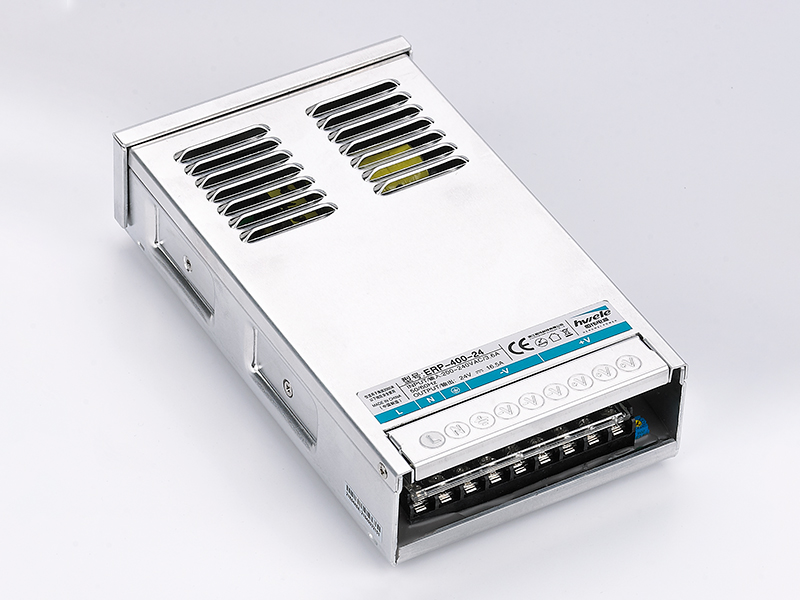
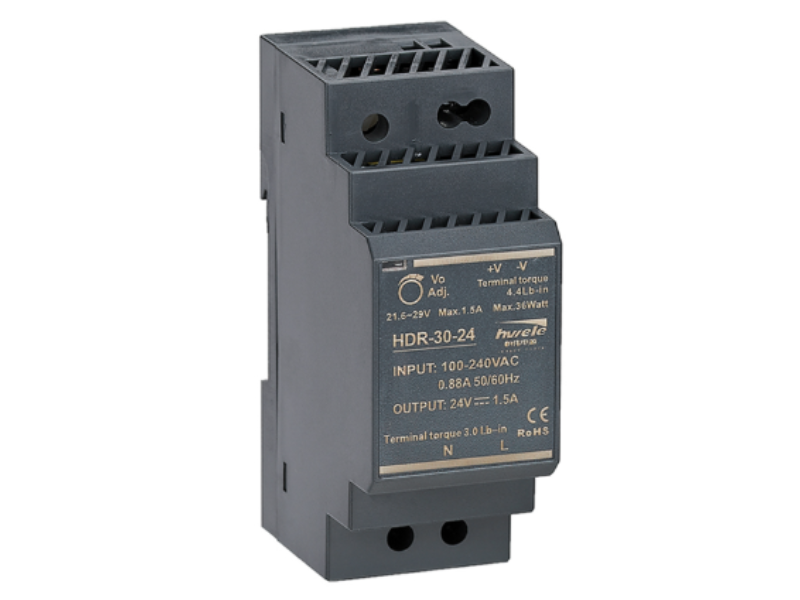
Our waterproof LED drivers (IP67, 6–320W) and standard LED drivers (12–400W, CV/CC) both feature active PFC. For outdoor commercial and municipal lighting projects — street lighting, area lighting, parking structures — where PF compliance is rigorously audited, our drivers are engineered to pass on Day 1.
We also offer OEM and ODM customization: if your project requires specific voltage tracks, dimming protocols, or enclosure ratings, our engineering team can adapt the active PFC driver platform to your exact specifications — with full certification support for your target market.
Active PFC (Power Factor Correction) is an electronic circuit — typically a boost converter — inside the LED driver that actively shapes the input current waveform to match the sinusoidal input voltage. By using a dedicated controller IC and high-frequency switching, it achieves a power factor of 0.95 or higher, minimizing reactive power waste and harmonic distortion. Browse HWELE’s active-PFC LED drivers →
Passive PFC uses inductors and capacitors to smooth the current waveform, typically achieving PF 0.70–0.85 with THD of 30–50%. Active PFC uses a switching boost converter with a control IC to force current into a near-perfect sine wave, achieving PF 0.95–0.99 with THD below 15%. Passive PFC is adequate for sub-25W residential applications; active PFC is mandatory for commercial and industrial LED drivers above 25W. See HWELE’s active PFC driver specifications →
Three reasons: (1) Regulatory compliance — IEC 61000-3-2, DLC Premium, and GCC utility codes mandate PF ≥ 0.90–0.95 for commercial lighting. (2) Cost avoidance — low PF inflates kVA demand and triggers reactive power penalties ($2,000–$8,000/year for a medium-scale project). (3) Infrastructure optimization — higher PF means more fixtures can fit on the same transformer, panel, and generator without upsizing.
The key standards are IEC 61000-3-2:2019 Class C (EU/global, PF ≥ 0.90 for >25W), DLC Premium V5.1 (North America, PF ≥ 0.90), DEWA Major Projects Guidelines (Dubai, PF ≥ 0.95 recommended), KAHRAMAA Wiring Code 2023 (Qatar, PF 0.90–1.0), Kuwait MEW R-1 (PF 0.95–1.0 system-level), and China GB 17625.1 (PF ≥ 0.90 for commercial). Many project-specific tenders set the bar at PF ≥ 0.95 regardless of national minimums.
Yes — the active PFC circuit adds approximately $1.50–$3.00 to the BOM cost compared to a driver with passive or no PFC. However, the total cost of ownership (TCO) analysis favors active PFC: the additional upfront cost is typically recovered within 6–18 months through avoided utility penalties, reduced transformer sizing, and lower cooling load. Over a 5-year commercial installation lifecycle, active-PFC drivers consistently deliver a lower TCO.
Request third-party test reports (TUV, SGS, UL) showing PF at 100%, 75%, 50%, and 20% load at rated input voltage. Verify that the driver model number in the test report matches the production BOM. Ask for luminaire-level PF data if the driver will be integrated. Confirm that PF remains ≥ 0.95 at your planned dimming setpoints. Request HWELE’s certified PF test data →
Yes. PF is typically highest at rated load and decreases at lower dimming levels. A driver rated PF 0.96 at 100% output may drop to PF 0.55 at 10% output. This is normal and acceptable because absolute current draw is low at deep dimming. However, for applications where fixtures operate at 20–40% dimming for extended periods (daylight harvesting, motion-sensor standby), request PF curves across the full dimming range from your supplier.
Generally, no. IEC 61000-3-2 sets differentiated limits: lighting equipment below 5W has no harmonic current limits; 5–25W has relaxed limits. However, if a project specification or tender explicitly requires PF ≥ 0.95 regardless of wattage — which is increasingly common in premium commercial projects — then all drivers in the installation must comply, regardless of individual wattage.
The consequences cascade: (1) Project handover is delayed until compliance is demonstrated. (2) Retrofit costs — replacing hundreds of installed drivers with compliant units costs far more than specifying correctly upfront. (3) Penalties and legal exposure — if PF non-compliance is discovered post-handover, the contractor or specifier may be liable for remediation. (4) Reputational damage — failing a compliance audit can disqualify you from future tenders with the same client or utility.
Absolutely. HWELE manufactures CE, UL, KC, and 3C certified LED drivers with active PFC across our standard LED driver (12–400W) and waterproof LED driver (6–320W, IP67) product lines. We provide full third-party PF and THD test data, load-curve documentation, and OEM/ODM customization to match your project’s voltage, dimming, and form-factor requirements. Contact HWELE for a Project Quote →
Active PFC is not a luxury feature — it is the engineering foundation on which commercial LED lighting projects are built in 2026 and beyond. As global regulations tighten and utility penalties become more aggressive, specifying LED drivers with PF ≥ 0.95 is the single most cost-effective decision a lighting specifier or procurement manager can make to protect project margins, ensure compliance, and deliver long-term value to building owners.
The key takeaways are simple: demand active PFC (not just “PFC”), verify PF across the full load range (not just at 100%), insist on third-party test data (not just a datasheet value), and choose a manufacturer with certified, field-proven products.
HWELE manufactures CE, UL, KC, and 3C certified LED drivers with active PFC. Our engineering team provides full PF/THD test data, load-curve documentation, and OEM/ODM customization. Contact us today for samples, specifications, and a project quotation.
Disclaimer: This article is for informational purposes only and does not constitute engineering advice. Regulatory requirements referenced are current as of July 2026 and may change. Always verify applicable standards with the relevant certification body or authority for your specific project and jurisdiction. Product specifications and certifications are subject to change; contact HWELE for the latest datasheets.


 Optimized by Seraphinite Accelerator