

As the global electric vehicle (EV) infrastructure expands, the demand for compact, efficient, and reliable power conversion has never been higher. For design engineers and procurement managers, selecting a Switched-Mode Power Supply (SMPS) is no longer just about voltage and current—it’s about thermal management, spatial efficiency, and long-term stability.
In this guide, we will explore why the 150W ultra-thin SMPS is becoming the gold standard for modern charging stations and industrial cabinets.
A Switched-Mode Power Supply (SMPS) uses a switching regulator to convert electrical power efficiently. Unlike traditional linear power supplies, SMPS technology switches a power transistor between on and off states at high frequencies (typically 50kHz to 1MHz). This high-frequency switching minimizes energy loss as heat and allows for much smaller magnetic components, such as transformers and inductors.
For charging station integrators, every millimeter inside the chassis counts. As charging piles become “smarter”—integrating 5G modules, large touchscreens, and complex payment systems—the internal space is increasingly crowded. The transition to “ultra-thin” profiles isn’t just an aesthetic choice; it’s a functional necessity to maintain air circulation and ease of maintenance within a limited footprint.
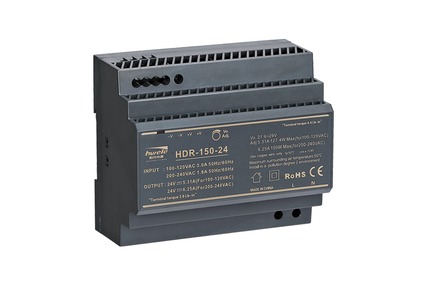
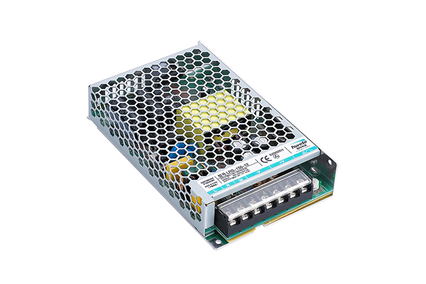
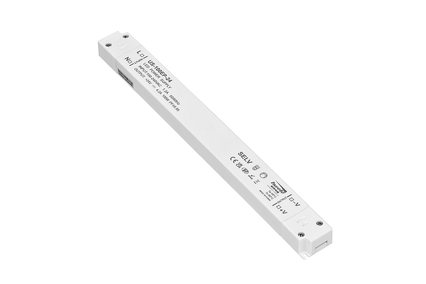
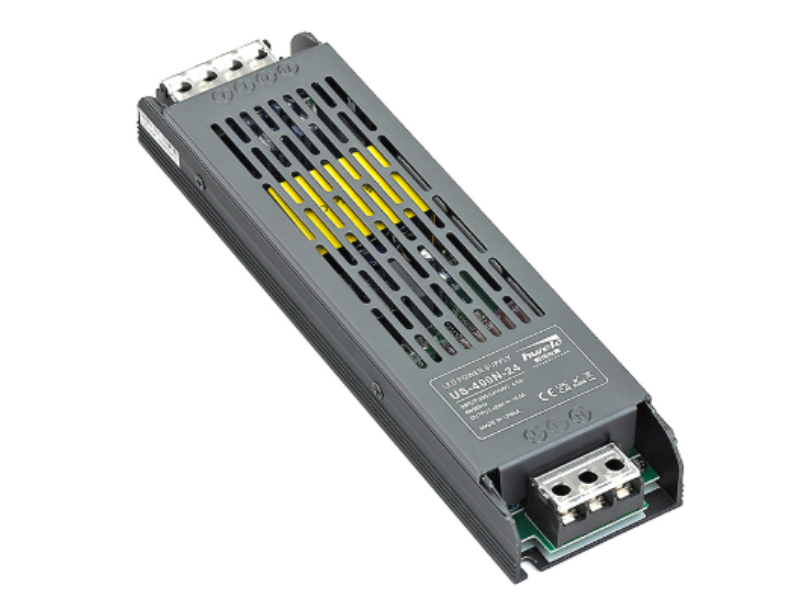
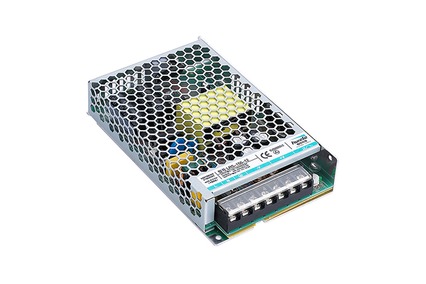
When you specify an ultra-thin power module like the Hwele 150W series, you are addressing several critical engineering challenges:
Traditional industrial power supplies are often bulky “bricks” that force engineers to build larger, more expensive enclosures. An ultra-thin SMPS allows for a “Low Profile” design. This flexibility means you can mount the power unit in narrow side-panels or even directly behind the display assembly, leaving the primary cabinet space free for heavy-duty components like DC contactors and thick power cables.
A common misconception is that thinner devices run hotter. However, high-quality ultra-thin SMPS units utilize advanced Synchronous Rectification and high-frequency switching to achieve over 90% energy conversion efficiency. This means only 10% of the energy is lost as heat. Combined with an aluminum-alloy casing that provides a high surface-area-to-volume ratio, these units dissipate heat more effectively than their thicker, less-efficient counterparts.

The following table highlights why engineers are moving away from traditional “cage” type power supplies in favor of slim-line modules for modern infrastructure.
| Technical Feature | Hwele 150W Ultra-Thin SMPS | Traditional Standard SMPS |
| Profile Height | Ultra-Slim (Typically <30mm) | Standard (50mm – 80mm) |
| Energy Conversion Efficiency | High-End (90% – 93%) | Moderate (80% – 85%) |
| Power Density | High ($W/cm^3$) | Low to Moderate |
| Heat Dissipation Type | High-Surface Passive Convection | Bulkier Heatsinks / Required Fans |
| Mounting Orientation | Horizontal, Vertical, or DIN-Rail | Usually Limited by Airflow Needs |
| Protection Rating | Built-in SCP, OVP, OLP | Standard Protections |
In the world of B2B infrastructure, “downtime” is the enemy. Our 150W ultra-thin power supply is engineered for industrial-grade endurance:
Wide Input Voltage Range: Designed to handle input fluctuations (e.g., 90V to 264V AC). This is crucial for charging stations located in remote areas or industrial zones where the grid may be unstable.
Low Ripple and Noise: Excessive noise in the power line can cause data errors in charging controllers or interfere with RFID card readers. Our 150W modules focus on clean output to ensure the “brains” of your charger run without glitches.
Electromagnetic Compatibility (EMC): Adhering to strict EMI standards ensures that the power supply doesn’t interfere with the 5G or Wi-Fi signals used for cloud management of the charging network.

150W Ultra thin Charging Station Switch Mode Power Supply 1
While optimized for EV Charging Stations, the versatility of the 150W ultra-thin module makes it ideal for several Industry 4.0 sectors:
EV Charging Infrastructure: Providing auxiliary power for the HMI (Human Machine Interface), payment gateways, and status LEDs.
Industrial Automation: Fitting into slim PLC control cabinets where depth is extremely restricted.
Digital Out-of-Home (DOOH): Powering outdoor LED advertising screens where the total display thickness must be kept to a minimum.
Telecommunications: Supporting compact 5G base stations and edge computing nodes that require high-reliability power in a small form factor.
Q1: How does the thin design affect the lifespan of the unit?
A: Lifespan is primarily determined by the quality of the electrolytic capacitors and heat management. By achieving 90%+ efficiency, Hwele SMPS units generate significantly less heat, which preserves the life of internal components and results in a longer MTBF (Mean Time Between Failures).
Q2: Can this power supply be used in outdoor charging piles?
A: Yes. When mounted inside a properly rated enclosure (such as an IP54 or IP65 cabinet), the 150W SMPS operates reliably across a wide temperature range, typically from -30°C to +70°C.
Q3: Is it possible to get custom voltage outputs?
A: While the 150W 12V and 24V models are standard for charging stations, we offer customization options for large-scale B2B orders to meet specific voltage or connector requirements.
In the competitive landscape of EV infrastructure, the components you choose define your product’s reliability. A 150W ultra-thin SMPS provides the perfect balance of power density, thermal efficiency, and spatial flexibility.
By choosing Hwele, you are not just buying a power module; you are investing in a component that simplifies your design process and ensures your equipment stays online 24/7.
Ready to optimize your next project?


 Optimized by Seraphinite Accelerator